


Strategy
Customers were already paying us
Factor+ cost $24.99 every four weeks or $99 a year. The offer was straightforward: pay a membership fee to save on shipping and premium meals.
But Factor already had a Rewards program. I initially argued for bringing the benefits into that program, rather than asking customers to understand another one. The team chose a standalone membership that we could price and test independently.
That left two things to resolve: would customers see enough value to join, and would their ordering change enough to justify the benefits?
Design
Make the value easy to see and use
I worked with a small product and engineering team in HelloFresh’s Gen AI squad, using Claude to explore ideas and prototype in code. We kept the first release focused. Tiering and gifting could wait until we understood the basic membership.
I concentrated the experience around three moments:
Joining. Make the price, billing schedule and benefits clear before customers commit. The cart experience shows what joining would save on the order they already have.
Using the membership. Apply benefits automatically and give customers one place to see their credits, savings and expiry dates.
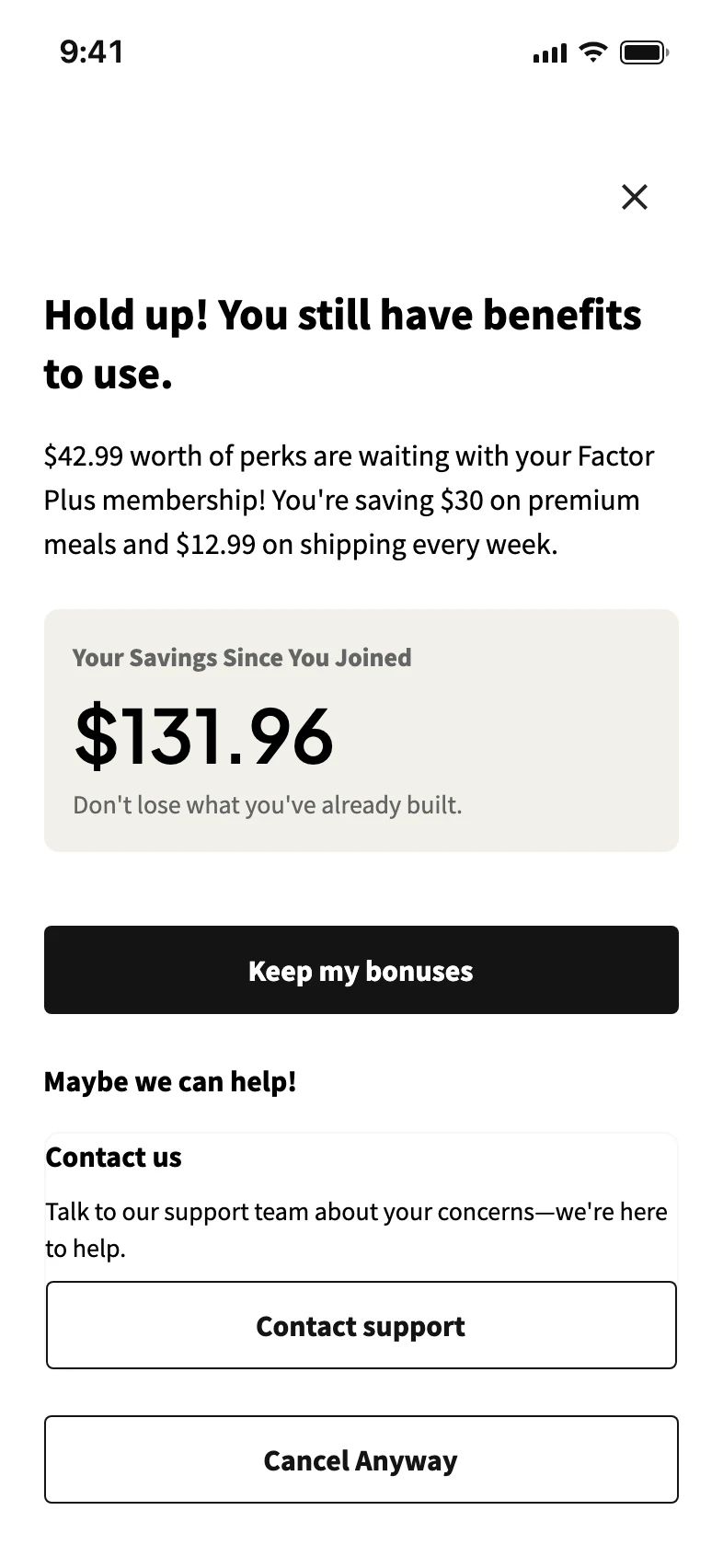
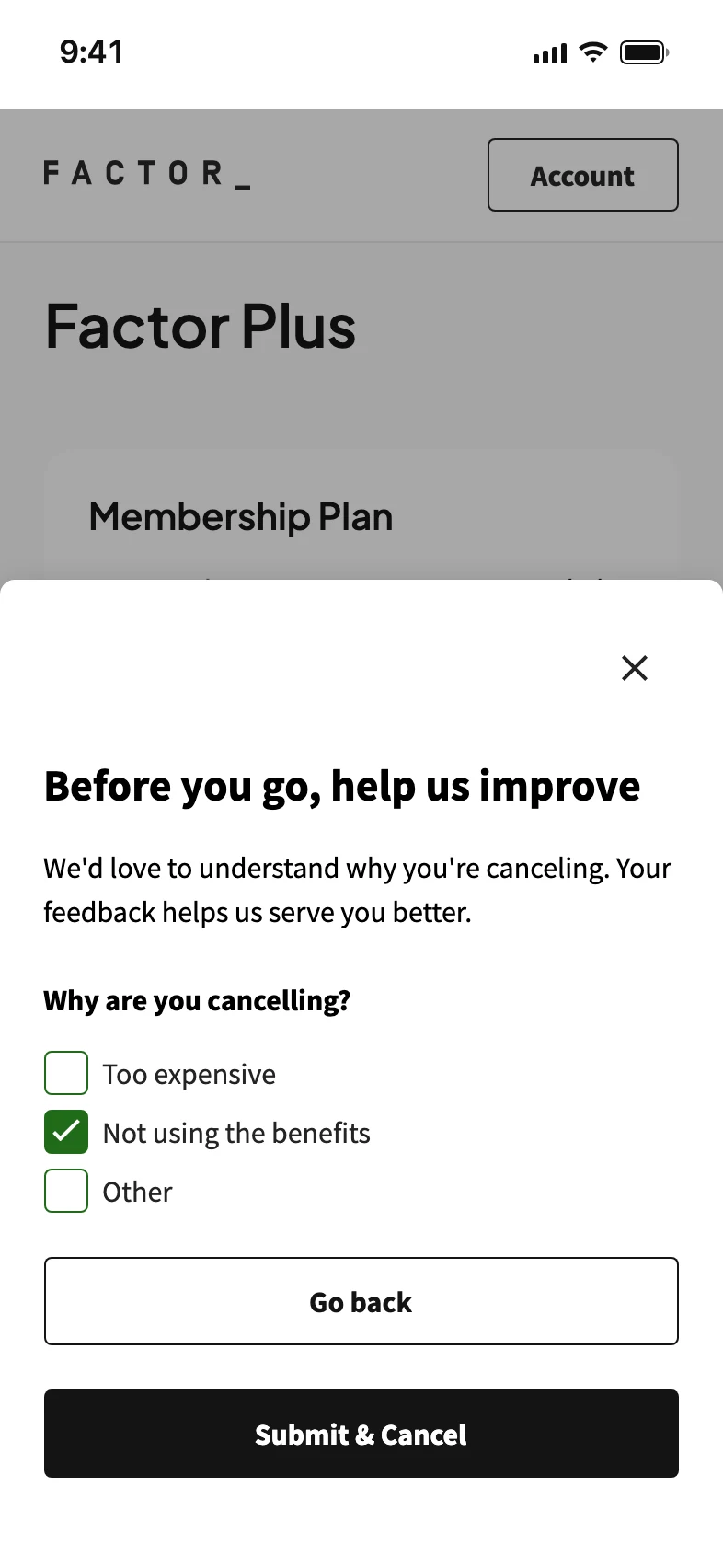
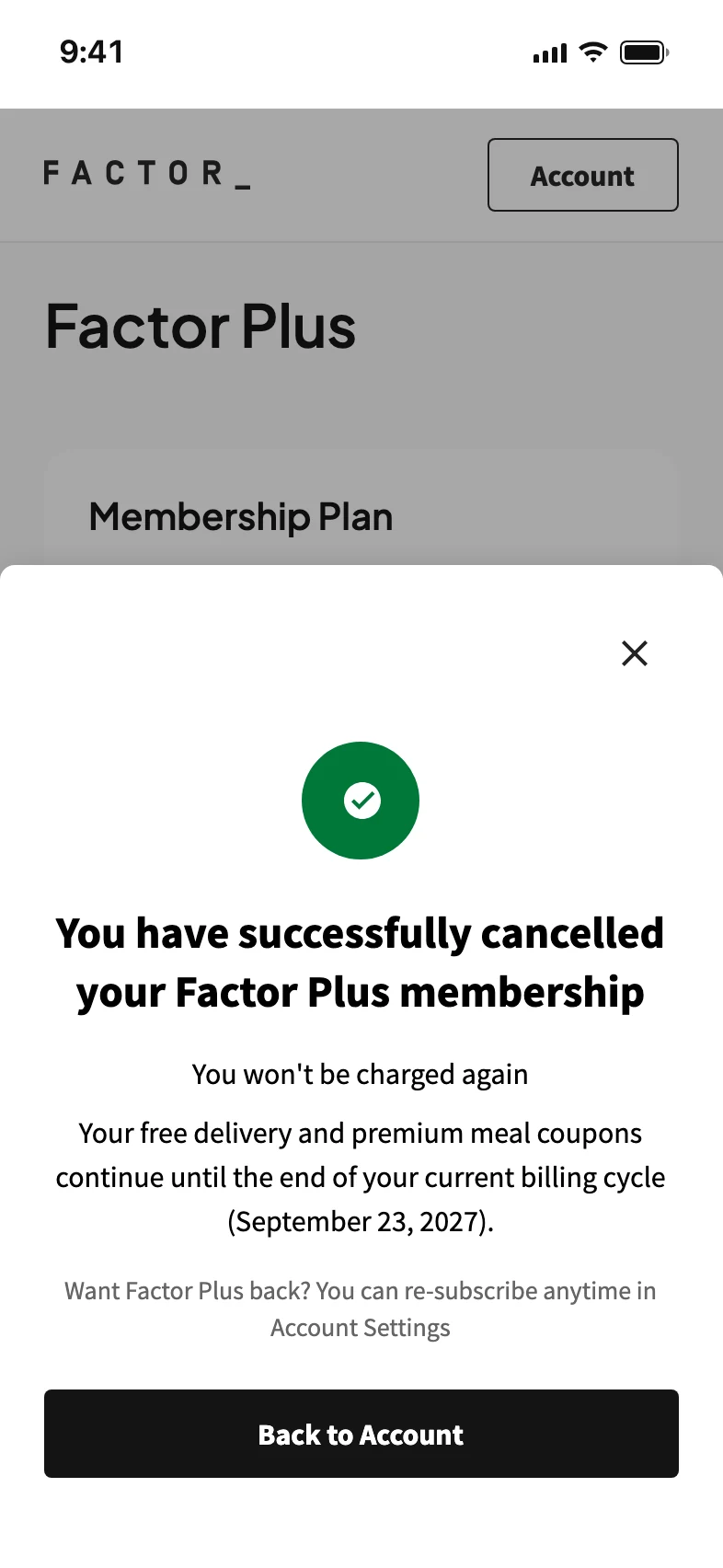
Leaving. Show what happens to the remaining benefits and confirm when billing stops.
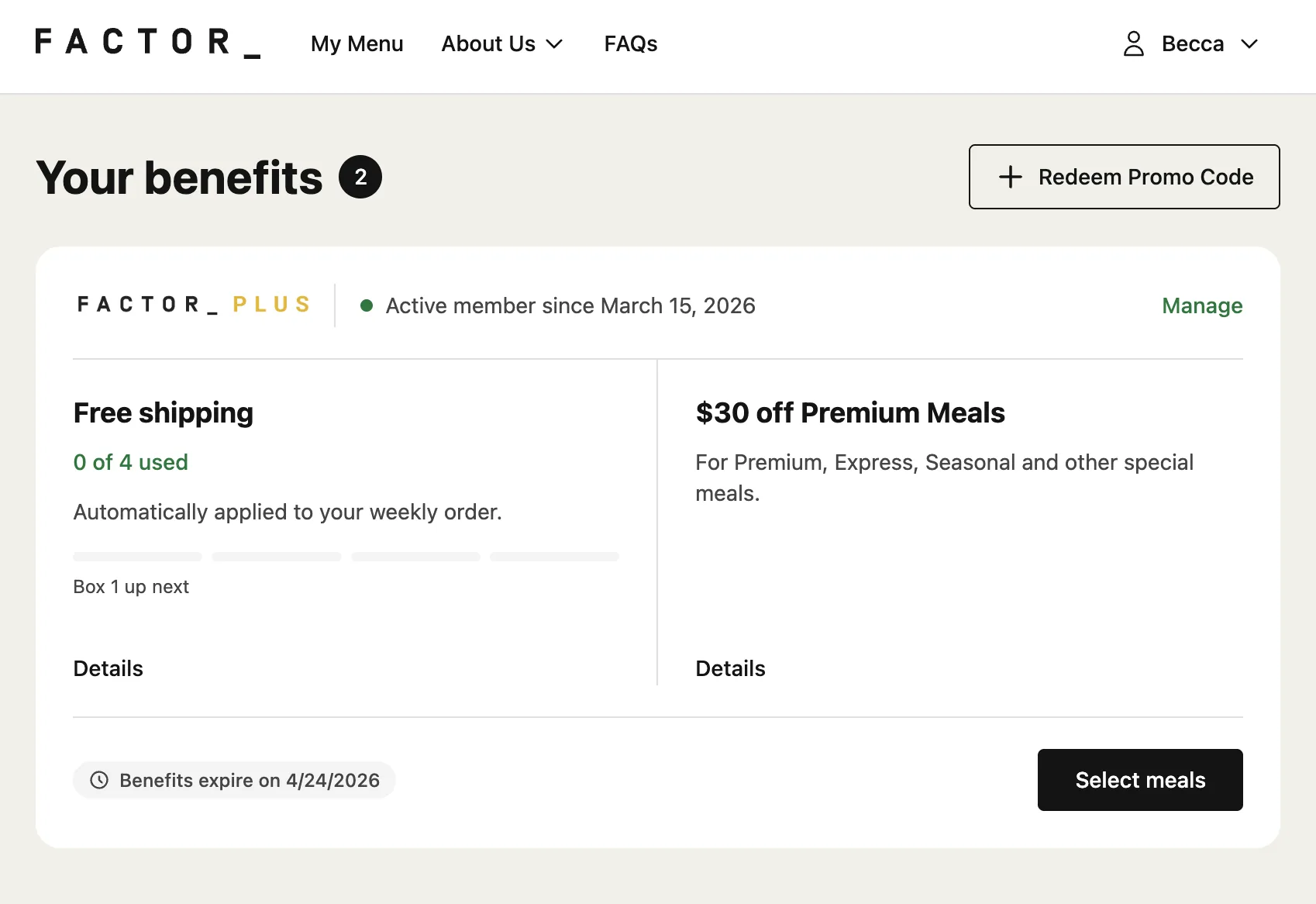
The membership hub shipped as the place to manage that relationship. The cart and cancellation demos below recreate those journeys using Factor’s production components and sample data.
- 01The offer, in the cartWhat joining would save on this order, right above the button that pays for it.
- 02One sheet to joinTwo plans, the card on file, and the terms in a sentence.
- 03Savings, appliedThe new total, before the order is placed.
Experiment
Include the customers we were worried about
The original brief planned to exclude highly loyal customers. They already ordered regularly, so we risked giving them discounts without getting any additional orders.
When I modeled it out by loyalty level, once you get to a certain loyalty level the company would actually start losing $750 per customer. It’s a fantastic savings for the customer, but it’s not a great model for the company. Our best customers, who would benefit the most from this, are actually the ones that cost the company the most.
I argued to include them in a separate test group. Excluding them would avoid the immediate risk, but it would also leave us guessing about whether the membership could work for them.
I documented the concern during launch week. We read the results by previous order history and compared everyone offered Factor+ with control, including people who never joined. Comparing members alone would favour customers who were already more engaged.
Results
The results supported a wider audience
In the target group, customers offered Factor+ averaged 2.408 orders, compared with 1.845 in control. Their predicted net value over 52 weeks was $353.80 versus $314.14, a difference of $39.66 per customer.1
Meal subscription cancellation was 67.24% versus 72.63%: 5.39 percentage points lower, or a 7.4% relative reduction.
The loyal customers were the surprise. Predicted value remained above control much further into that group than our initial concerns suggested.
Predicted value vs control
+12.6% −1.3%1
Predicted net value over 52 weeks per customer offered Factor+, by previous order history. LL indicates previous box count.
Overall adoption reached 9.96%, although the target group’s adoption was lower at 6.52%. By week 34, 45,609 weekly active Factor customers were members, representing roughly 9% of the active customer base.
The August recommendation was to expand to LL10–30, monitor LL30–50, and keep LL50+ paused while the benefit structure was reviewed.
The original plan would have excluded these loyal customers together. Testing them gave us evidence to include some and reconsider the offer for others.